Modular Building Sourcing by Occupancy by Creative Modular Construction
A site office and a clinic can share a module envelope while requiring very different ventilation, fire and utility interfaces. Give the bidder a room schedule and the local reviewer the actual assembly details.
Wind 45 m/s example basisSnow 1.5 kN/m² example basisSeismic 0.30 g example PGAU-value is panel-center, not the joint
Four applications and their RFQ inputs
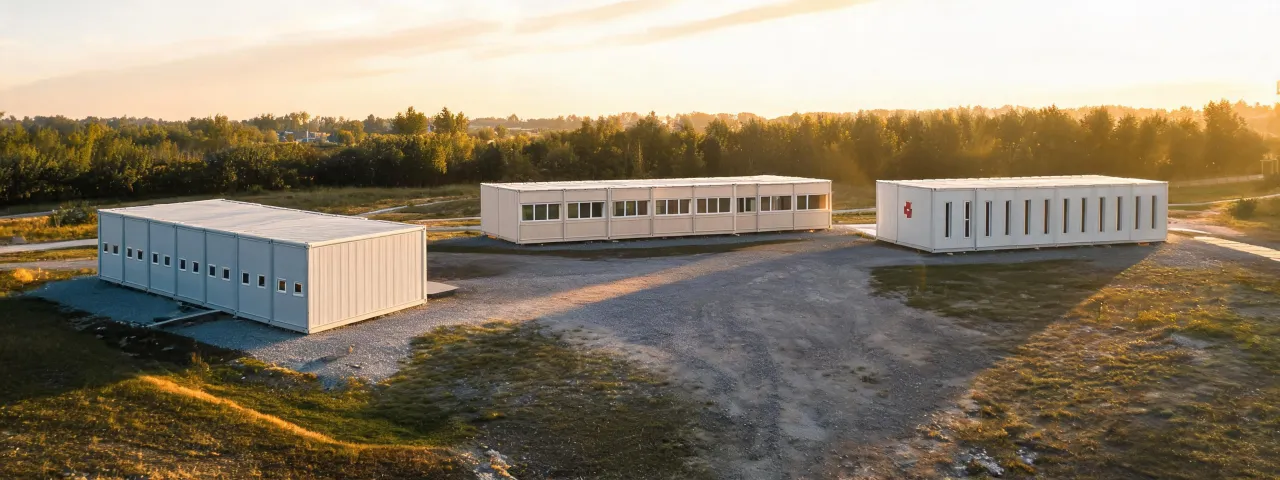
Construction compounds
Construction compounds may change occupancy by phase. Compare a bolted cold-formed steel kit with a volumetric shell on temporary storage, assembly labor and relocation plans. Request coating mass in g/m² alongside the steel grade and coating designation.
Education annexes
For education annexes, a 75 mm panel designation describes thickness. Ask for a tested wall section, acoustic report and service penetration details before comparing classrooms on speech privacy, egress or fire separation.
Clinical and welfare rooms
Clinical rooms can benefit from MEP preinstallation when the service connections are accessible at the module joint. Ask the bidder to mark test access, water pressure and drainage inverts so the destination installer can estimate final connection work.
Remote camps
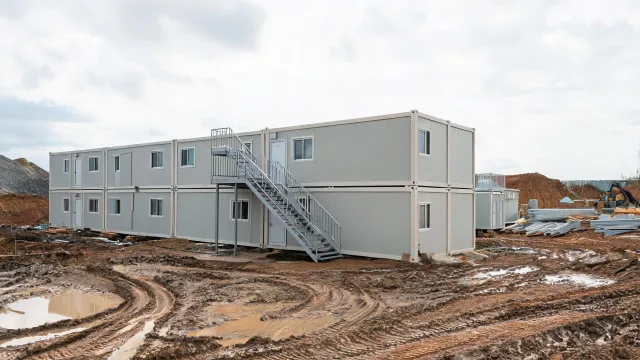
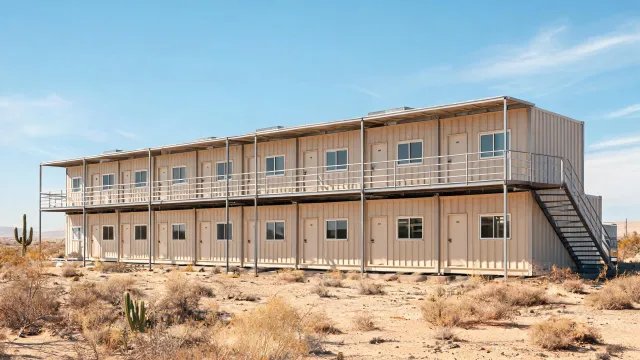
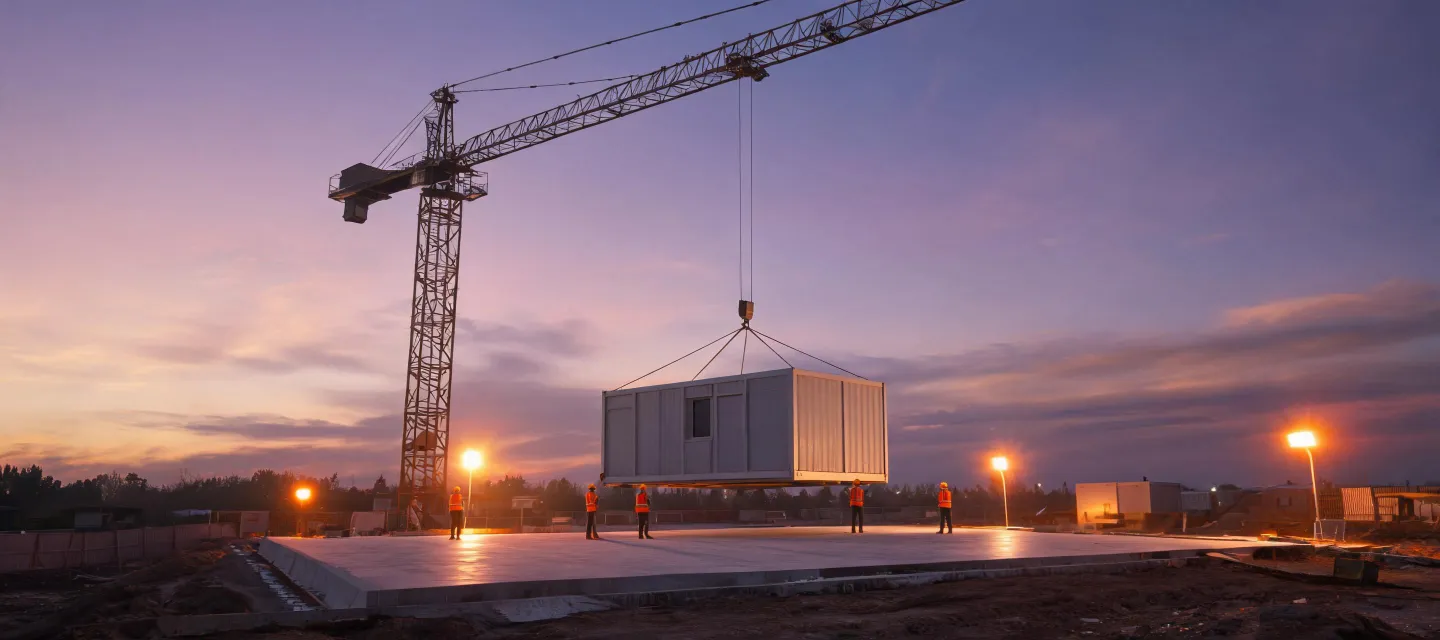
A stacked camp needs a project design basis for wind, snow and seismic actions. Compare foundation interface tolerances, lifting points and the supplier's restrictions on stacking before you settle on a room count per block.
Compare options on the same brief
The following comparisons describe hypothetical RFQs. Use the same occupancy and destination on both options, record local work separately and ask the supplier to identify its supporting document revisions.
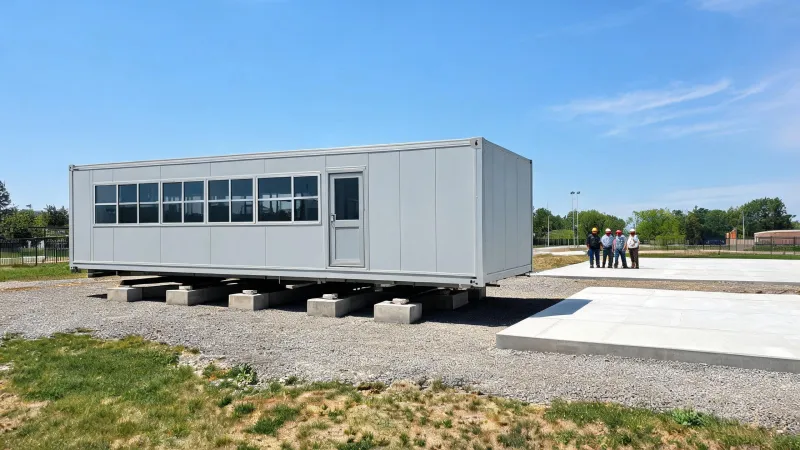
Volumetric modules versus panelized kits
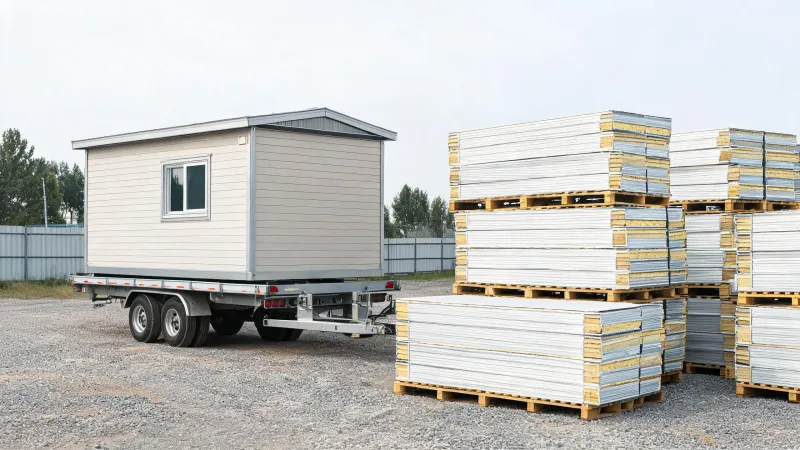
A twenty-four-room brief with narrow road access could favor panelized kits because transport envelopes are smaller. A finished volumetric option can reduce field fit-out. Compare the maximum package width in mm, total truck movements and crew days at the same delivery point.
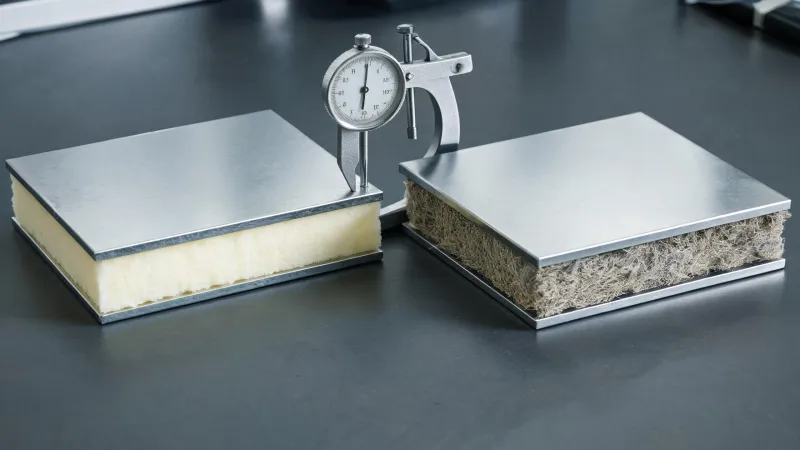
EPS or PIR foam versus rock wool
PIR and EPS can reduce envelope weight. Mineral wool may suit a particular fire strategy if the full assembly has applicable test evidence. For a proposed 60-minute separation, ask for the report specimen, fasteners and penetrations, and compare the U-value in W/m²K for the same wall boundary.
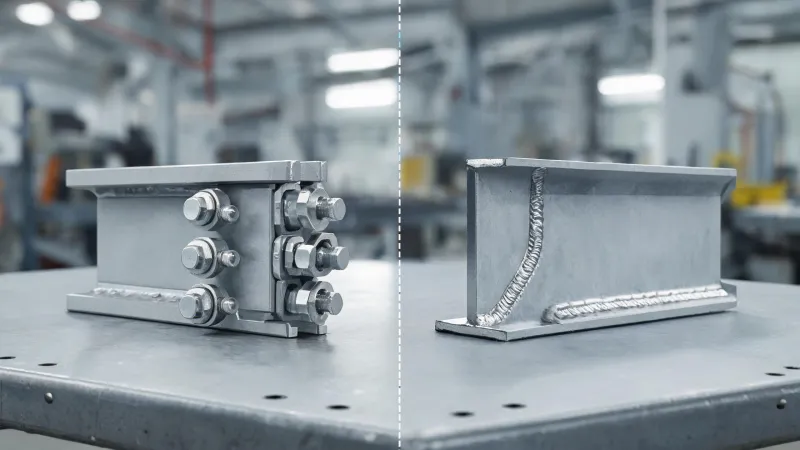
Welded frames versus bolted knock-down frames
A bolted package may improve 40HQ packing density at the cost of site assembly. Welded frames can arrive with more factory work complete and may require more shipping space. Compare units per container, site torque checks and corrosion repairs after handling.
Temporary classification versus permanent compliance
Relocatable classrooms may make redeployment viable while a permanent use case may demand different evidence and approvals. Compare the intended service life, anticipated moves and maintenance access. The local authority determines the applicable classification.
Scope your occupancy and delivery route
Share occupancy, building footprint and the destination's documented load criteria. Include any locally mandated fire separation and the required move-in window so our supplier screening starts with the factors that change the offer.